Showing posts with label Personalities. Show all posts

Friday, October 12, 2012

Any impression we choose to make, leaves a permanent mark.


Eli was a soft-spoken, delicate, thoughtful child in Mrs B's class. Mrs B, was an extrovert who couldn't understand why Eli was so reserved. His 'shyness' concerned her, and with the very best intentions, she made it her mission to help him grow out of it. She deliberately made sure he contributed to classroom discussion by calling on him, even if his hand wasn't up, she gave him the opportunity to be the presenter at assembly for their class item, and placed him in groups with the louder and more boisterous boys, with the hope that they would rub off on him. Like many introverts, Eli feared public ridicule, and doing things wrong (Silverman, 1999). Mrs B's attempts to 'help him out of his introversion', encroached on Eli's confidence, leading him to feel shameful and ridiculed by his teacher (Silverman, 1999).


Eli.
Picture from here.


"And the first step, as you know, is always what matters most, 
particularly when we are dealing with those who are young and tender. 
That is the time when they are easily moulded and 
when any impression we choose to make leaves a permanent mark." 

Plato - The Republic (Plato, 1987, p. 133).


Not only do our classrooms tend to discriminate against the introverted child, according to Burress and Kaenzig (1999), the majority of teachers view introversion as a problem that needs to be fixed. Like Mrs B, they seek to shape children into behaving like extroverts, hoping that they become friendlier, work in larger groups, release their inhibitions, and talk more often and more spontaneously (Burress & Kaenzig, 1999).

This idea of shaping children to behave a certain way relates to the psychological theory of behaviourism. Behaviourism refers to the effects that external events have on our behaviour (Krause, Bochner, Duchesne and McMaugh, 2010). When teachers use the strategy of shaping, they notice behaviours expressed by the child which resemble the target behaviour, and then use positive reinforces, such as praise, to gradually strengthen this desired behaviour (Krause et al, 2010).

For example, a teacher may draw explicit attention and praise to an introverted child when they contribute to classroom discussion. They would do so with the hope that this 'extroverted' behaviour would continue, and over time the introverted behaviour would become extinct. Although with good intentions, and perhaps even unconsciously, strategies that shape children into becoming extroverts is not uncommon within our schools (Hodgson, 2012).  

Have we forgotten the delicate and beautiful contributions that the introverted child makes to this world (Silverman, 1999)?

They offer introspection, sensitivity towards situations and others, calmness, and higher moral development (Silverman, 1999).

Nussbaum (2002) goes on to explain that introverts have an ability to think deeply and reflectively. This draws on CsikszentmihalyiΚΌs flow where one is wholly invested, captivated and engaged in a task (Nakamura & Csikszentmihalyi, 2001). Introverts tend to enter flow easily, and as a result are more creative, innovative, productive, motivated, and inspired (Nakamura & Csikszentmihalyi, 2001).

Cain (2012) continues to reiterate this idea by saying that great things happen when introverts tune into their inner worlds. Without introversion we wouldn't have the theory of Gravity, Google, Harry Potter, Animal Farm, or The Cat in the Hat (Cain, 2012).

There is no doubt that introverts have something incredible to offer this world.

In Plato's Republic he says that 'any impression we choose to make leaves a permanent mark' (Lee, 1987, p. 133). Behaviourist theory has proven controversial as it can seem as if teachers are leaving such an impression, that they begin to control who their students become (Krause et al, 2010). As we eduate our children into becoming the extroverted ideal, are we really manipulating them into becoming the best they can be?  

Or do we want to reinforce and encourage the beautiful contributions that both personalities can make, and unleash our children's true inner-selves? Whether that be introverted or extroverted personas.

Friday, October 5, 2012

Introvert or Extrovert?


Isla and Xanthe represent two distinct personality types, introversion and extroversion. These terms were derived by Jung (1923), as cited by Burruss and Kaenzig (1999), and on the simplest level refer to where we gain our energy from (Hodgson 2012).

Introverts typically gain their energy from within themselves, retreating to quiet solitude to recharge. Extroverts, on the other hand, are energized from social interaction (Silverman, 1999).  This is why Isla prefers to retreat to her dreamland rather than play hopscotch with Xanthe.

Although most people draw on traits from both personality types, we usually identify more strongly with one, over another (Burruss & Kaenzig, 1999). By clicking  here, you can answer a few questions to determine which personality type you associate more strongly with. This quiz was created by Cain (2011) based on characteristics of introversion commonly accepted by contemporary researchers. 


Picture from here
Adjectives derived from Cain (2012, p. 269) and Hodgson (2012, p. 60)


While introverts like to reflect on their thoughts, ideas and feelings, and process their words before speaking, extroverts gain clarity from talking and acting before thinking (Alcock, 1998). Silverman (1999) explains that introverts often fear public humiliation and are far more sensitive to the consequences or impact that their words or actions have. For this reason they often prefer to show the world their finished products, and like to carefully rehearse before they speak or act (Alcock, 1999). 

In 1967 Eysenck intended on discovering whether introversion and extroversion was related to our genetics. He discovered, as cited by Furnham and Strbac (2002), that compared to extroverts, introverts have higher cortical arousal levels within their brain, making them more sensitive to stimulation. This means that their cortical arousal levels will peak easily with change, interruption, large social interactions, jumping between activities and background music (Eysenck, 1996). As a result, they may find themselves needing to close off from the outside world and seek peaceful solitude in order to avoid being overwhelmed and over stimulated (Eysenck, 1996). The description of Isla shows this when it describes that Isla found the class noisy, too fast, and that she often got lost in discussions or expectations.

Lower levels of cortical arousal within extroverts means that, in comparison, they are often found intentionally seeking stimulation to avoid underarousal (Eysenck, 1996). They are bored by routines, easily engage in multiple, simultaneously occurring activities and pursue risk taking, excitable experiences. This explains why Xanthe enjoys going to different extra-curricular activities, with different people, everyday after school.


Picture from here

According to Western culture, Xanthe, an extrovert, represents the ideal citizen, employee and student (Hodgson 2012). We want our children to have lots of friends, enjoy going to parties, greet new experiences with ease. We hold the belief that success and power lies in confidence, assertiveness, dominance, volume, and quick thinking (Cain, 2012).  And we translate these preferences onto our children (Hodgson, 2012).

Have we become so caught up in a need and desire to educate children into becoming this extrovert ideal that we have we have lost an ability to recognise and value the Islas's? The quiet, deep, gentle, creative, dreamers known as introverts? As teachers, are our group seating arrangements, noisy classrooms, rapid lessons, minimum wait time, charismatic natures, and negative perceptions surrounding introverts harming our Isla's and breeding a population of Xanthe's?

Monday, October 1, 2012

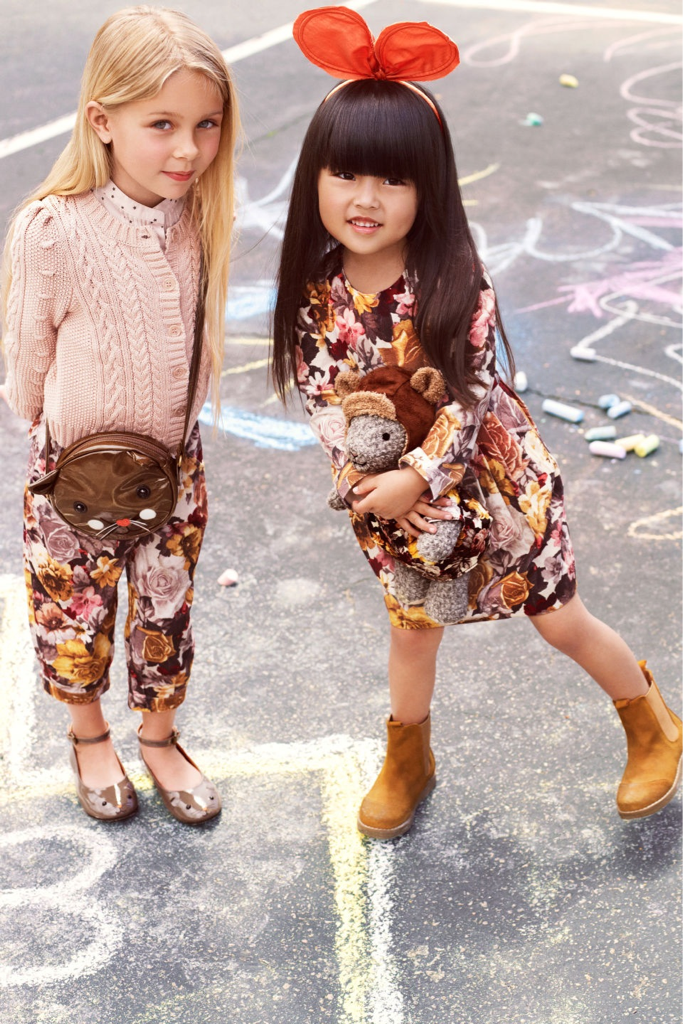
Isla&Xanthe.

Picture from here.
Isla (left) Xanthe (right). 

Isla was a sweet and cheerful girl. She had a serene stillness and gentle nature, a quiet and calm approach. At a glance, Isla blended into the crowd, but her classmates spoke with warmth and admiration towards her. She was always one to notice when someone was upset, and the first to be confided in. She listened with ease, and comforted with empathy and wisdom. Isla enjoyed playing hopscotch with her best friend Xanthe, but she loved retreating to her dreamland even more. She had a particular fascination with drawing exquisite and beautiful garments that she hoped to be in fashion week one day. 

Although Isla said that she enjoyed school, her teacher thought her to be removed, sensitive and shy. Her reports often read, "Isla has plenty of potential, if only she contributed more". She found the class noisy, and too fast, often getting lost in discussions or explanations. Not because she wasn't bright, but because she was engrossed in a concept her teacher mentioned last Tuesday. She felt flustered when the teacher spontaneously altered the classroom timetable, or rearranged the desks.

Isla found herself lost in the playground at lunchtime. Her brow line furrowed as she battled the overwhelming nature with which her friends bounced from one activity to the next. When her mum collected her, at the end of the day, she would have a rather quiet and emotional disposition. But after retreating to her room and snuggling up with a book, she seemed to return to her usual chirpy self. 

Isla seemed to live a rich inner life, that made her different from other girls her age. Especially Xanthe. The large red bow upon the top of Xanthe's head summed up her character quite nicely. She was bold and outgoing, confident and assertive. She liked to talk, rather than think, and found staying still rather boring. Monday was a long and tedious day for her, because it was the only day she didn't have either ballet, brownies, gymnastics, hockey or any other one of her many extra curricular activities on. Xanthe was funny, charming, exuberant, and one of the most popular girls at school, and she liked it that way. Her school reports described her as "an obvious leader, full of energy and relational skills. Xanthe's confidence and 'let's do it attitude' prepares her for a bright and successful future". She was an ideal student. 


Note: Any descriptions of children within this blog are entirely fictional, unless otherwise stated. They are, however, informed by relevant and contemporary research.

Hodgson (2012), Cain (2012), Alcock (1998) and Silverman (1999) informed my introverted and  extroverted descriptions of Isla and Xanthe.